
Start with your group’s own rules
Robert’s Rules of Order is a parliamentary authority that an organization may adopt. Applicable law, bylaws, and any adopted special rules take precedence. Small boards and committees may also use more informal procedures under the official rules. Check what your group actually follows before treating any agenda template or software setting as a requirement.
- Use this guide when your group already follows Robert’s Rules or wants a place to organize its meeting material.
- If your group needs formal governance advice, consult its governing documents and a qualified parliamentarian.
Prepare a proposed agenda
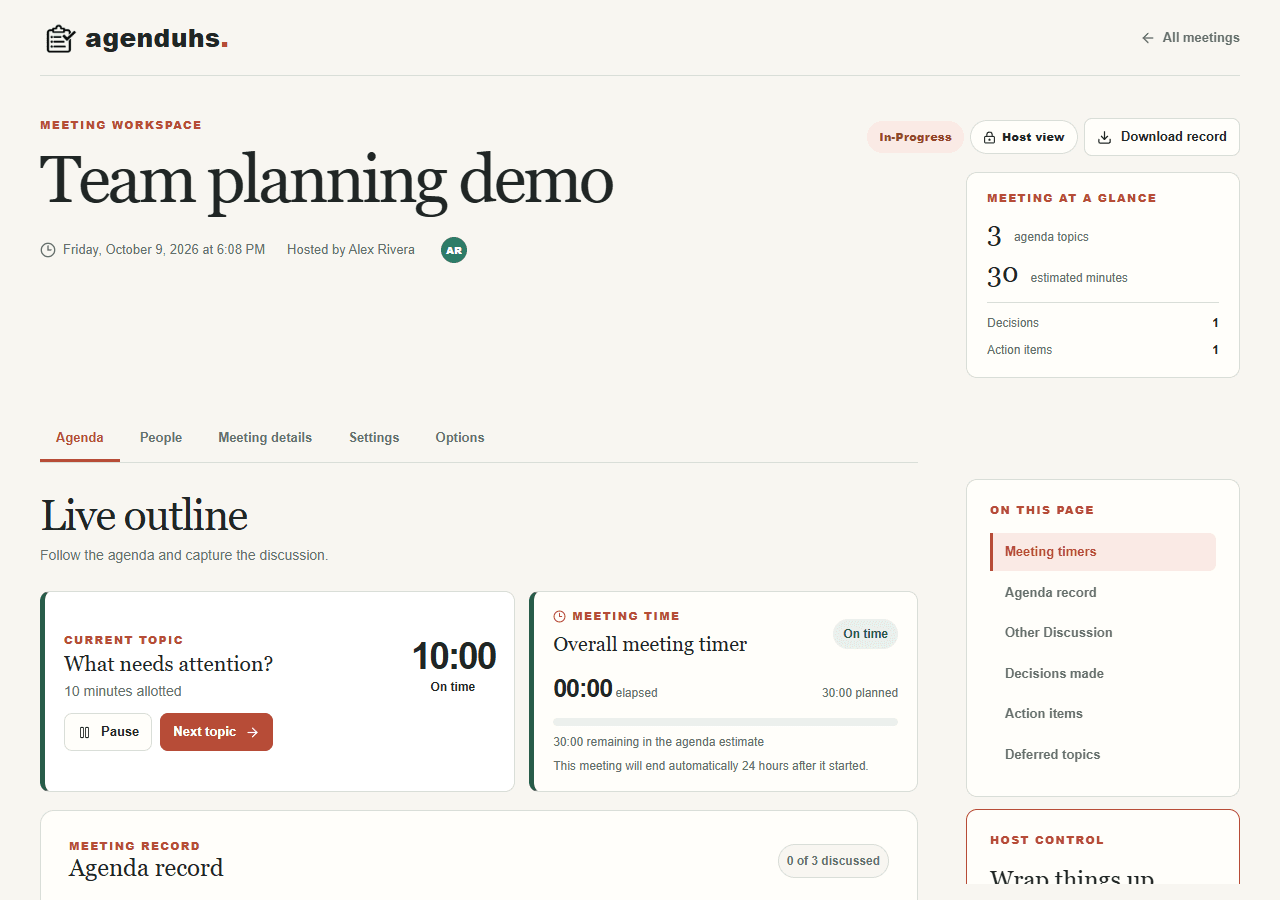
Create a meeting in Agenduhs and add each item the chair expects to bring before the group. Put background, the name of the person introducing the item, and any proposed motion wording in the topic details. Invite people to review the material before the meeting if your group’s rules permit it.
The Agenduhs agenda is a planning document. It does not become an officially adopted agenda merely because the host published it; under Robert’s Rules, the assembly may need to adopt a proposed agenda at the meeting.
Equipment replacement — review the written proposal and cost estimate. Proposed motion: authorize the purchase up to the amount stated in the proposal. The chair will handle any motion and vote under the group’s rules.
Run the procedure in the meeting, record the result in Agenduhs
The chair handles recognition, motions, amendments, debate, quorum, and voting according to the group’s rules. Agenduhs does not determine whether a motion is in order or whether a vote passes. Its optional topic-interest marker is only a planning signal; it is not a vote.
Use the agenda item’s minutes for a concise account of what the group did. If a decision was reached, record the final wording and outcome beside that item. Add an action item for work assigned after the decision. If your rules require a vote count or names in the minutes, record those details in the item minutes after they are confirmed by the chair or secretary.
- Keep the adopted motion’s final wording distinct from an earlier proposal or amendment.
- If no decision was made, say so rather than marking the item approved.
- Record a deferred matter as unfinished work when appropriate; do not treat Agenduhs’s Defer control as a formal parliamentary motion.
Review, approve, and retain the official record
Agenduhs can assemble a working meeting record, but it does not approve minutes on the assembly’s behalf. Have the appropriate person review and correct the draft, then follow your group’s process for approving minutes. Export the completed record as PDF or DOCX and place the approved version in the organization’s record system.
Current Agenduhs meetings are automatically removed at the earlier of 60 days since the host last accessed the meeting or 365 days since retention began. Keep an external copy of any official record your group must retain longer.
Further reading
For the current parliamentary rules and interpretations, consult the official sources: