
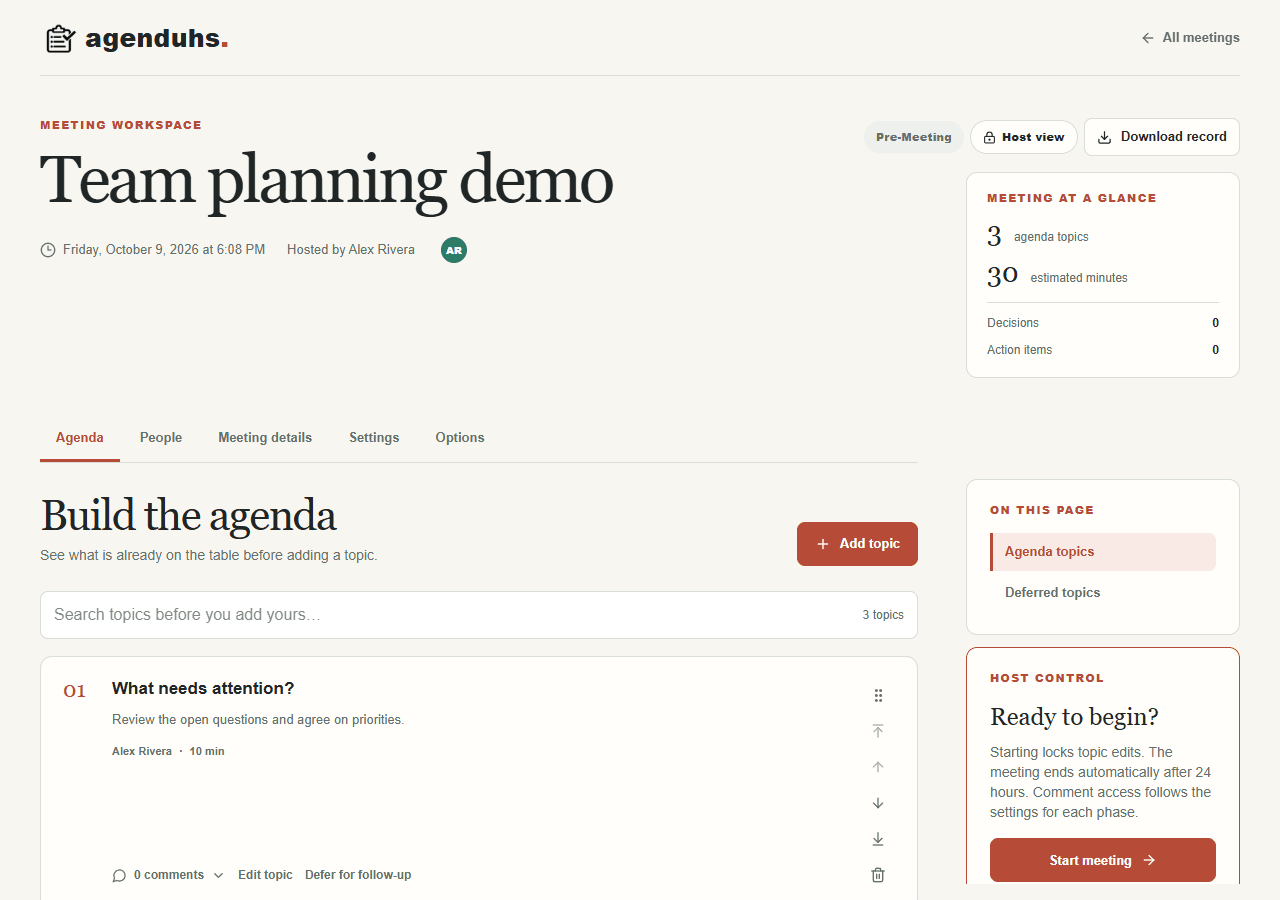
Start with the outcome, not a vague subject
A label such as “Budget” leaves everyone guessing. Write the question the group needs to answer or the decision it needs to make. If the item is only an update, say what people should learn from it.
Decide whether to extend the evening service hours in November. Review attendance and staffing first; leave with a yes/no decision and an owner for the announcement.
Collect topics before people arrive
Invite participants to suggest topics early enough for the host to combine duplicates, request missing context, and set a sensible order. A submission deadline helps when the agenda must be settled before the meeting.
- Ask for a short title and the reason the topic matters.
- Request any document or decision needed in advance.
- Tell contributors when additions or edits will close.
Give each item a workable shape
Include the person who will introduce the item, an estimated duration, and the desired result. Time estimates are a planning aid: they show when the agenda is larger than the meeting, even if the conversation later needs to change course.
- Put urgent decisions before routine updates.
- Keep closely related items together.
- Leave enough time to confirm decisions and assignments before closing.
Keep unfinished items visible
If an item cannot be covered, record that it was deferred and why. Do not let it disappear from the record or quietly treat it as decided. At the next planning session, decide whether to carry it into a new meeting.