
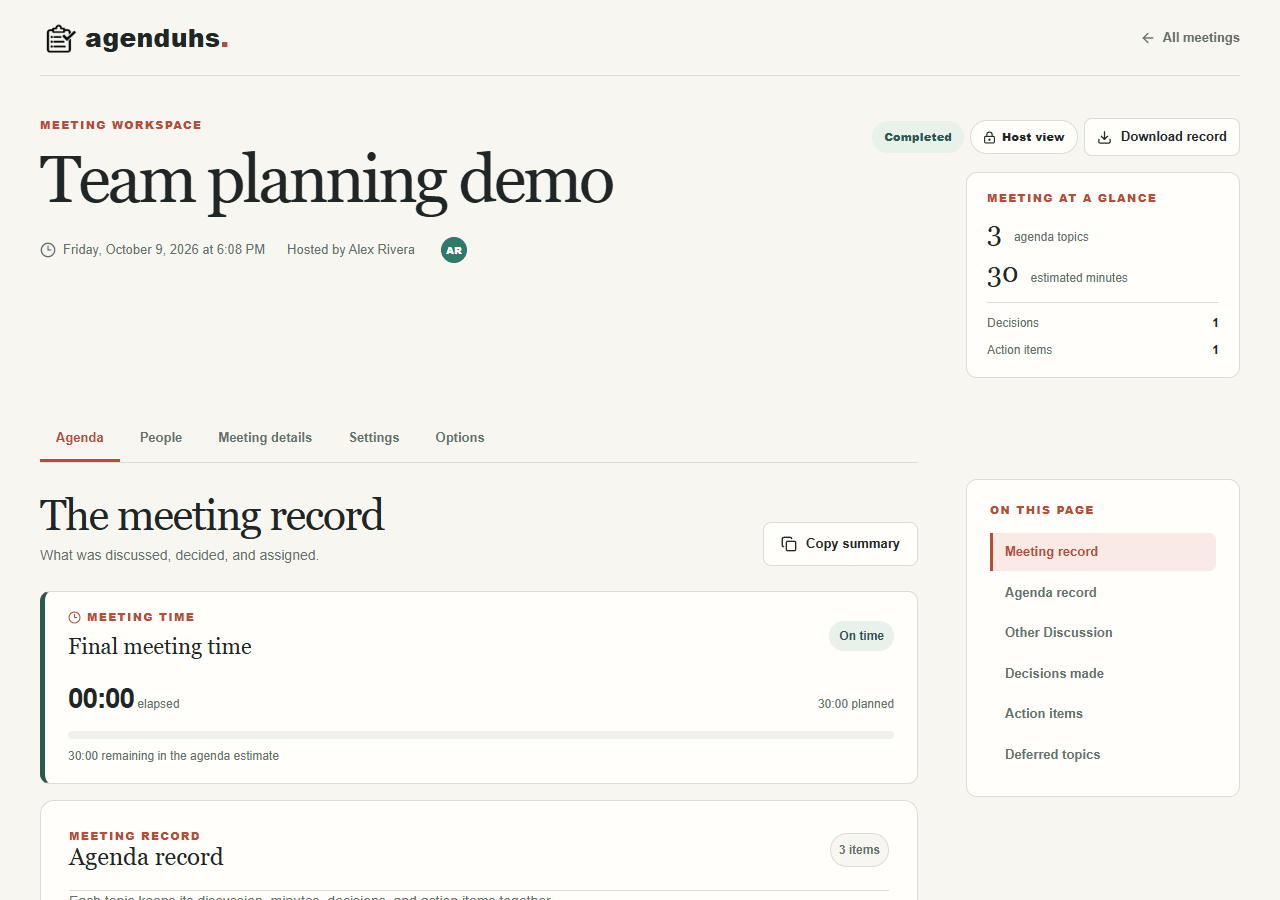
Record outcomes without judging the discussion
Capture decisions made, actions assigned, and the essential facts that explain them. Leave out emotional commentary, guesses about motives, and a play-by-play of every remark. If no decision was made, say so plainly.
Use exact names, titles, and dates
Replace “they will handle it soon” with a named person, a specific task, and a date. If the group refers to a document, use its actual title or a stable description. Precision prevents an action from becoming unassignable later.
Decision: Approve the revised November schedule. Action: Dana Kim will send the final schedule to volunteers by October 15, 2026.
Make the record stand on its own
Imagine a participant opening the minutes a year later. The record should identify the meeting, its date, the subject of each decision, the person responsible for each next step, and any deadline. Avoid unexplained pronouns or shorthand that only the people in the room understand.
Separate discussion, decisions, and actions
A discussion note describes context. A decision states what the group agreed. An action states what one person will do next. Keeping those distinct makes the meeting record easier to scan and makes follow-up measurable.
- Discussion: the relevant issue or constraint.
- Decision: the agreed result, including when no change was approved.
- Action: the task, owner, and due date if one was set.